

Stone is a noble and durable material, but it is not immune to the effects of time, weather, and freeze-thaw cycles. Cracks, chips, broken corners, and worn surfaces are all issues that, if not addressed quickly, can compromise both the structural integrity and the appearance of a building. Several repair techniques can restore stone without requiring full replacement, and professionals such as architects and engineers rely on the expertise of building restoration specialists like Atwill-Morin to carry out this work.
Here is an overview of the main methods used by our masons.
Dutchman Repair (Partial Stone Replacement)
A dutchman repair involves replacing only the damaged portion of a stone rather than the entire piece. The deteriorated area is first identified, then cut out and removed. A new stone is then carefully shaped to match and fit perfectly into place, like a puzzle. The new section is secured to the existing stone using epoxy adhesive and anchors. This technique preserves as much of the original material as possible while maintaining both strength and appearance. It is commonly used for broken corners or heavily deteriorated areas.

Restoration Mortar
Restoration mortar is used to repair surface defects such as spalls, cracks, or damaged mouldings, particularly on heritage stones that are to be preserved without full replacement. For example, when a corner is deteriorating, the damaged portion is first removed. The surface is then prepared by roughening it to ensure proper adhesion. The mortar, prepared on site by masons to match the color and texture of the existing stone, is applied slightly overfilled. It is then shaped and sculpted to restore the original appearance of the stone. This method is ideal for less severe damage where the integrity of the material can be preserved.

Crack Injection
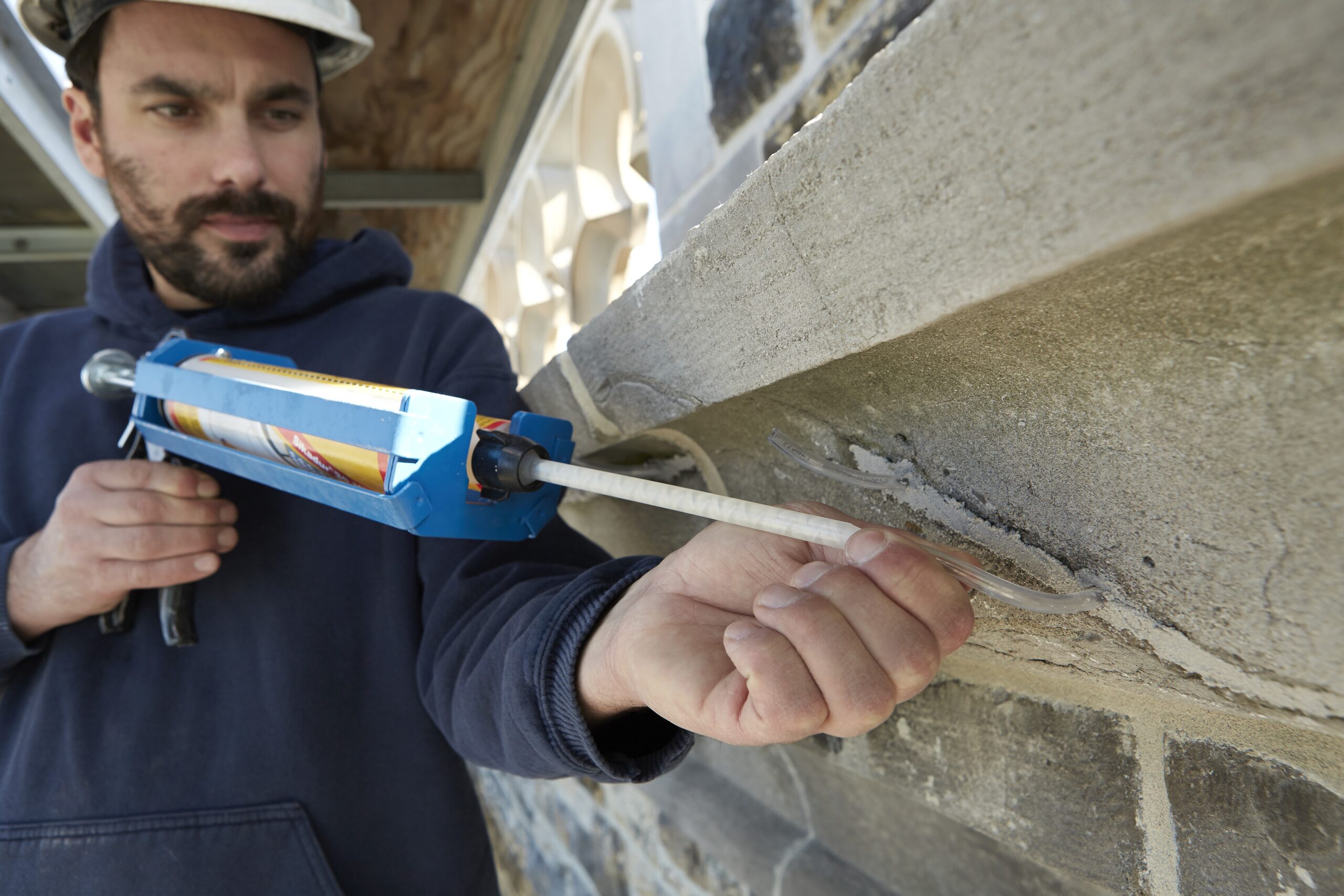
Crack injection is used to repair deep cracks within the stone. The crack is first cleaned and drilled with small injection ports. A fluid product, typically an epoxy resin or cement grout, is injected directly into the crack to fill it from the inside. The resin then cures chemically to form a watertight and durable seal. This restores the continuity of the stone and prevents water infiltration and freeze-thaw cycles. It is particularly useful for stabilizing the stone, preventing water infiltration, and stopping the crack from widening due to freeze-thaw cycles or differential movement.

Stone Resurfacing
Natural stone resurfacing such as marble, granite, or limestone involves grinding and polishing the surface using diamond abrasives to remove scratches, stains, and dullness, restoring the original finish. Resurfacing involves cleaning, sanding or grinding, and then polishing the stone. A protective sealer is often applied afterward to help protect the stone. This technique is ideal when the stone is worn at the surface but remains structurally sound beneath.
Choosing the Right Technique
The choice of repair method depends on the extent of the damage, the depth of deterioration, and the type of stone. Whether it is a heritage building, a commercial façade, or a multi residential property, Atwill-Morin has the expertise and craftsmanship to handle your stone repair needs, regardless of complexity.
Contact us to discuss your project.

