
Tramway Building
Montreal
2025
Montreal
2025
Restoration of the Tramway Building Facades
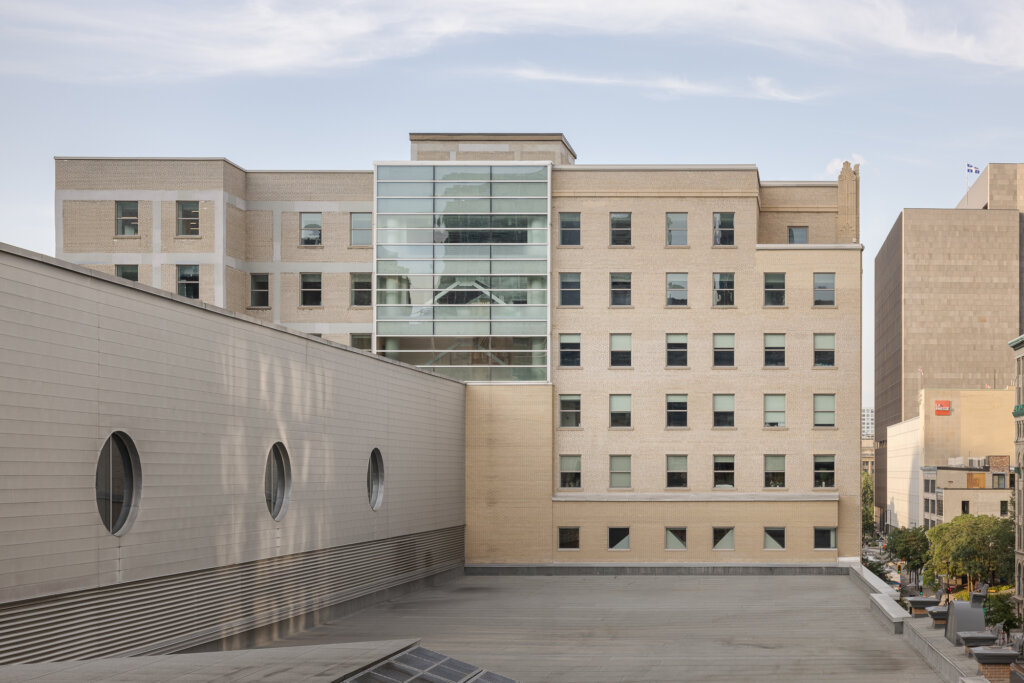
Comprehensive masonry work was carried out, including the replacement of deteriorated stones and the repointing of stone and brick. Certain sections of the building required new brick, which was carefully installed to restore both the structural and aesthetic integrity of the walls. Precast concrete elements were also installed to meet the project’s specific requirements.
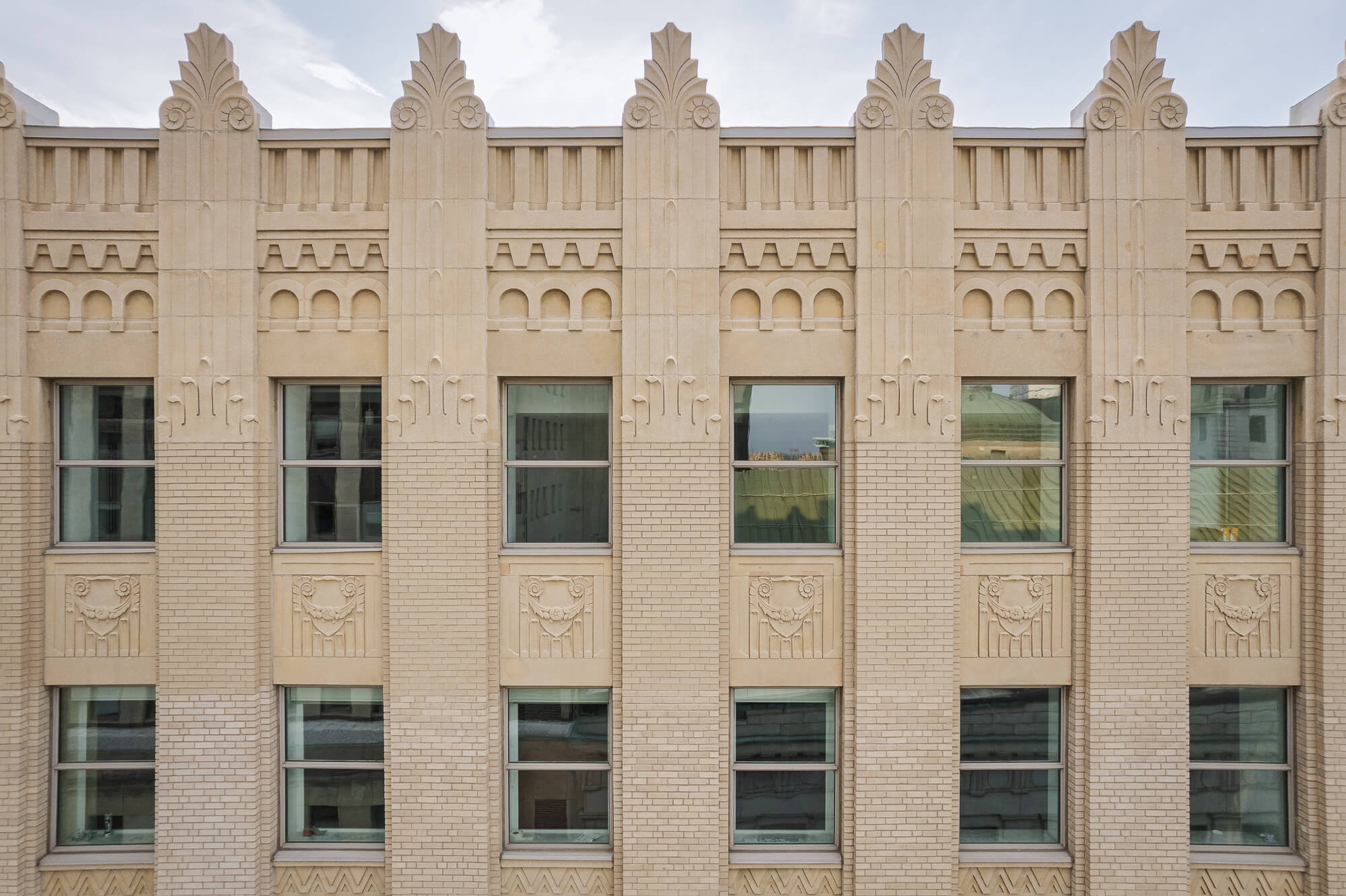
Our team removed damaged concrete sections and brushed the steel reinforcements to eliminate corrosion. A corrosion inhibitor was then applied, followed by a bonding agent before plastering. The repaired sections were kept moist for seven days using a curing compound to prevent cracking, with daily wetting to ensure optimal curing. Once the concrete reached full strength, a coating was applied to protect it and create a uniform appearance.
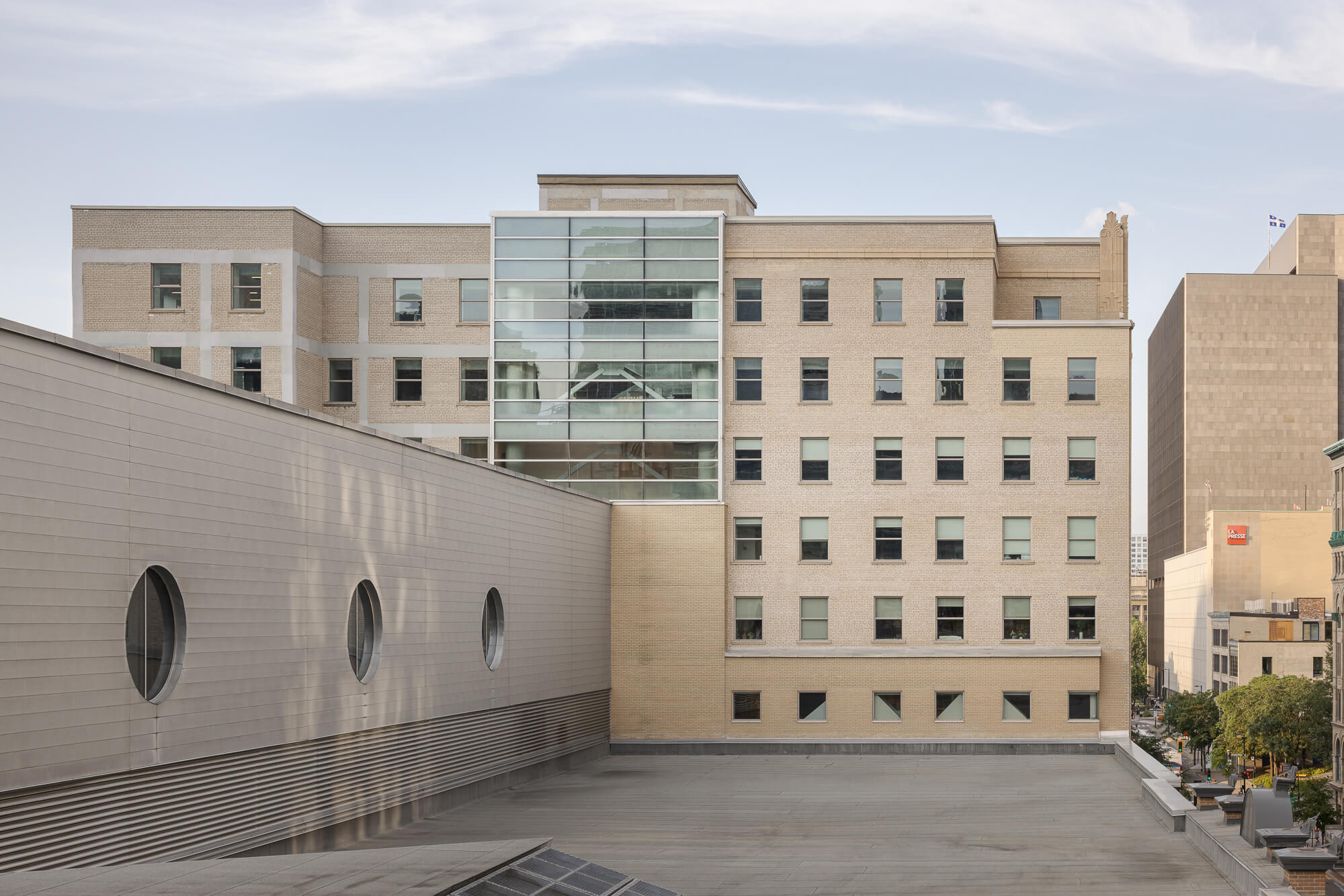
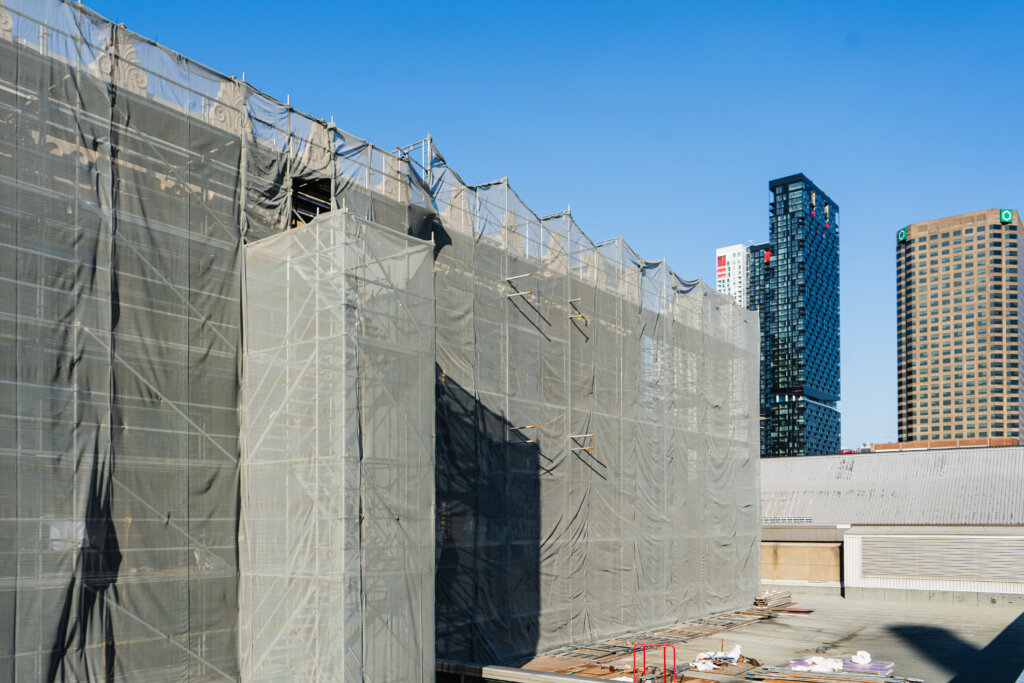
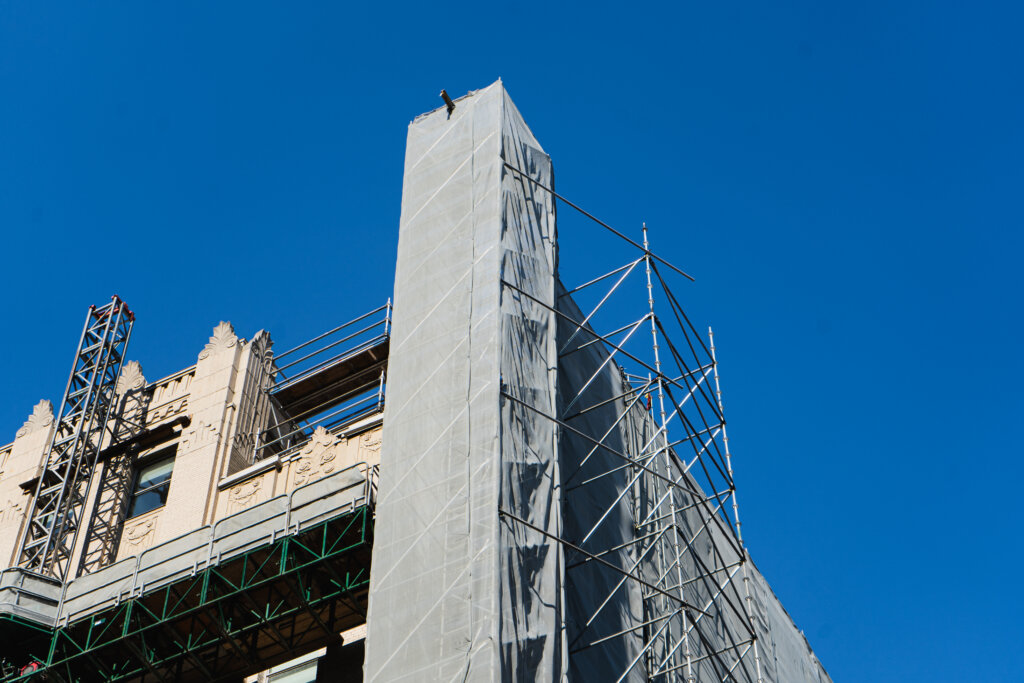
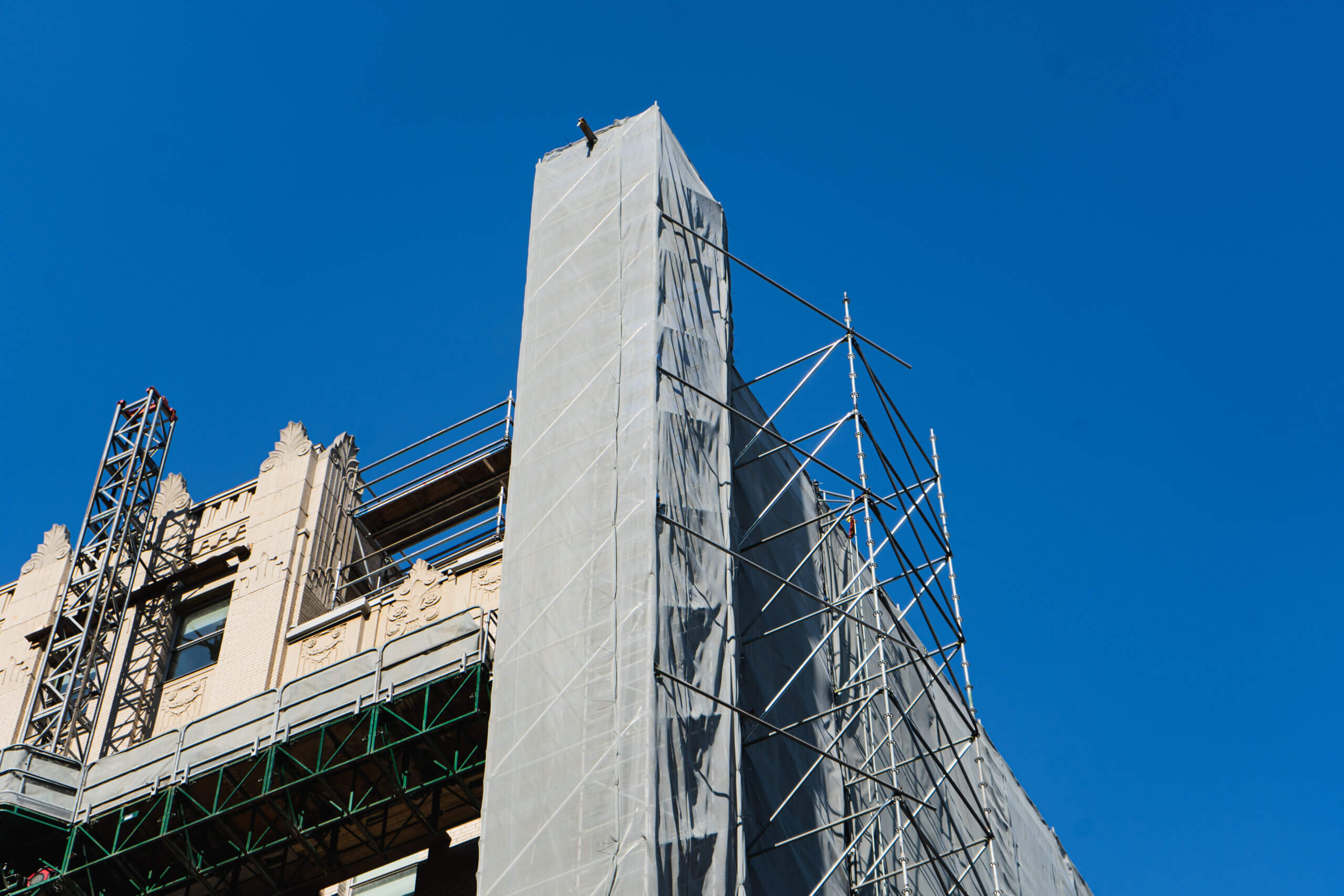
Scaffolding work began with the installation of two hydraulic mast platforms, allowing masonry work on the exterior facades. To continue masonry interventions on the roof, frame and rosette scaffolding was erected.
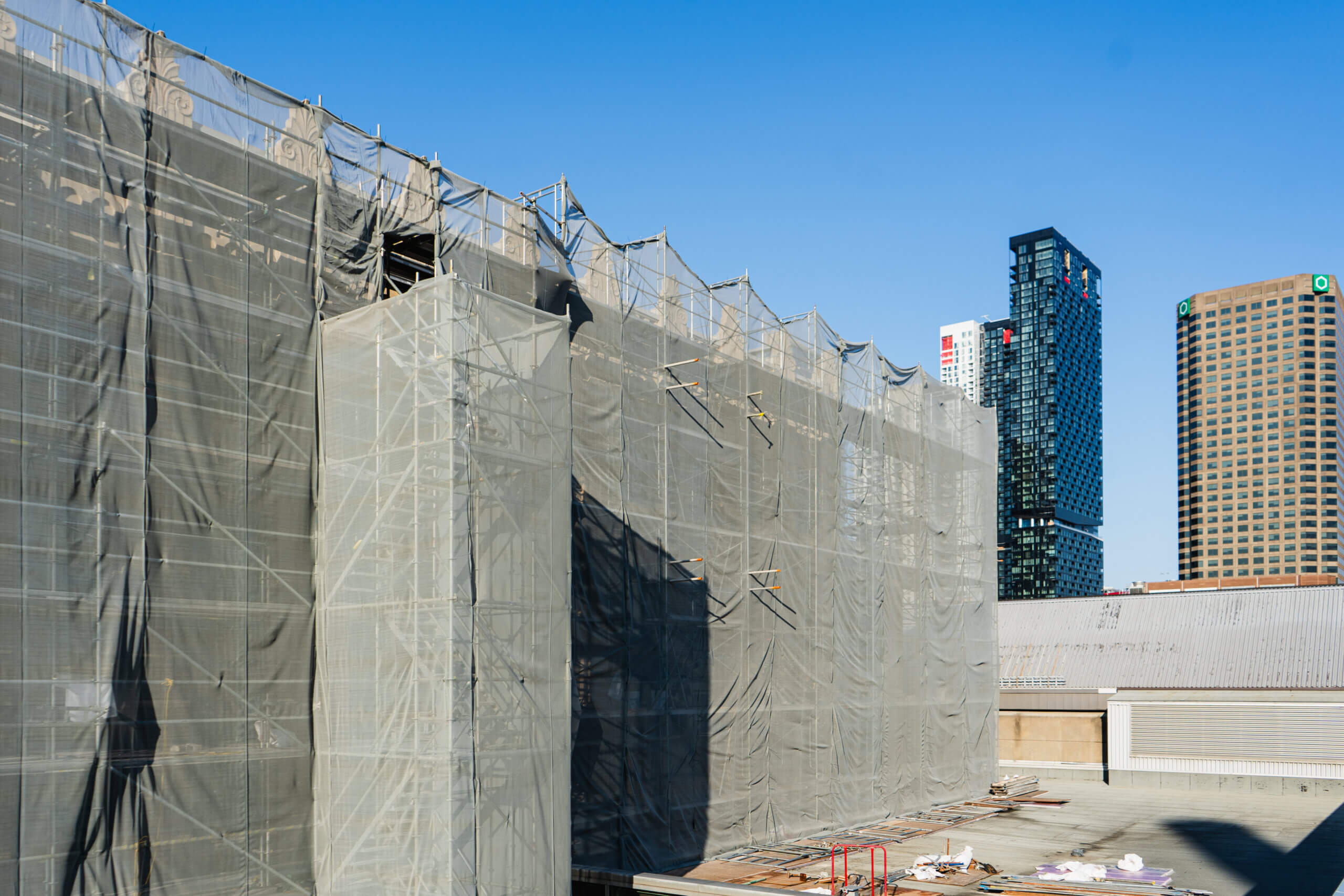
To facilitate material handling, a hoist was installed from the ground to the roof. This system allowed not only the transport of stones to elevated work areas but also the lifting of scaffolding components needed for assembly. Worker access was ensured via several temporary stairways connecting the ground to the scaffolding levels and the roof.
Restoration of the Tramway Building Facades
Comprehensive masonry work was carried out, including the replacement of deteriorated stones and the repointing of stone and brick. Certain sections of the building required new brick, which was carefully installed to restore both the structural and aesthetic integrity of the walls. Precast concrete elements were also installed to meet the project’s specific requirements.
Our team removed damaged concrete sections and brushed the steel reinforcements to eliminate corrosion. A corrosion inhibitor was then applied, followed by a bonding agent before plastering. The repaired sections were kept moist for seven days using a curing compound to prevent cracking, with daily wetting to ensure optimal curing. Once the concrete reached full strength, a coating was applied to protect it and create a uniform appearance.
Scaffolding work began with the installation of two hydraulic mast platforms, allowing masonry work on the exterior facades. To continue masonry interventions on the roof, frame and rosette scaffolding was erected.
To facilitate material handling, a hoist was installed from the ground to the roof. This system allowed not only the transport of stones to elevated work areas but also the lifting of scaffolding components needed for assembly. Worker access was ensured via several temporary stairways connecting the ground to the scaffolding levels and the roof.
Expertise that Speaks for Itself
Join our Winning Team
We provide a rich, open, responsive, and close-knit work environment. As an employer, we foster strong team spirit and treat our people with respect and consideration.
News
Media Appearances
Community Involvement
News about our team, achievements, and community involvement. Our work stands the test of time, and we are constantly striving to become even better.
News
Media Appearances
Community Involvement
News about our team, achievements, and community involvement. Our work stands the test of time, and we are constantly striving to become even better.